JustRussian, Russian courses, lessons and tuition in London
Just Russian courses and tutor in London

Russian courses, lessons and tuition in London

Russian Blog

This is a blog by JustRussian about learning Russian. You will find useful tips for learning Russian, Russian courses available in London, information about Russian culture and links to websites with information for students of Russian.

My experiences learning Russian, by one of Vlada's students

By Vlada 30 December 11

I’m a reluctant Russian learner. Actually, let me rephrase that: it was never my plan to learn Russian. I simply found it necessary after marrying a Russian woman.

Being a linguist, I was airily confident. I’d learned several languages before (including some ancient, dead ones). I knew all the theory of language learning. I’d done it many times. Russian lessons would be a piece of cake.

How hard, I asked myself, could it be?

Well, as you will have inferred already from that corny and rather obvious set-up, it wasn’t as straightforward as I’d hoped.

Learning Russian isn’t, to steal a phrase, just one of your holiday games. After a mere two lessons, I realised I’d bitten off more than I could chew easily. This was going to be a major Project.
Eight years later, it’s still ongoing. Admittedly, it needn’t be. I’m a lazy linguist in my advancing years, and don’t put in the time to learn vocabulary or instill grammar rules in my brain.

Moreover, my efforts at Russian mastery are sporadic at best. I’m ashamed to say that whole years have passed without my picking up a text book or learning anything new whatsoever. Life being what it is, Russian lessons are rarely my first priority. And the wife is all too willing to indulge me in English… so necessity isn’t driving me as it might.

So how have I found it (er, when I’ve actually been bothering to study)?

Well, let’s do the bad news first…

Bad news one: Case, gender and number. There are three genders in Russian and six cases… so nouns and adjectives take multiple forms depending on their position or role in a sentence. If you know any Latin or Greek, this concept will be familiar. It won’t make it any easier to decline nouns correctly, on the fly, in conversation. This takes endless, painful practice.

Bad news two: Conjugation. Again, like Latin or Greek, Russian verbs conjugate according to pronoun, tense and voice. More painful trial and error. LOTS of error (see above).

Bad news three: Perfective and non-perfective forms of every verb make for another painful learning experience. It effectively means you must learn two word roots and conjugations for every verb. Distressing.

Bad news four: Verbs of motion. That’s all I’m saying.
Am I putting you off? Don’t panic. It’s not all bad news. For balance, here’s the other side of the story:

Good news one: The Cyrillic alphabet is easy. No, honestly. It baffles me that so many folks assume that learning another alphabet is going to be horribly hard. It’s the easiest part. Russian is spelled phonetically, so words are nearly all written exactly as they sound… which makes a pleasant change from, say, English. Trust me: if you think this is the tough part about learning Russian, you’re in for a nasty shock.

Good news two: No articles. ‘The’ and ‘a/an’ don’t exist in Russian. Which saves quite a bit of aggro and nonsense. If you know any western European languages, you’ll know how irritating it is to have reproduce articles correctly with gender agreements. In Russian, this problem simply doesn’t exist (except in converse: pity the luckless native Russian struggling to understand the whole concept of articles when learning English).
Good news three: Some of the ‘weird’ gender agreement stuff common in other European languages isn’t an issue in Slavic ones (French preceding direct object, anyone?). There ARE plenty of other problems, but not these ones… thank God.
Good news four: No dialects. Learn French in Calais and you’ll be pretty baffled by what you hear in Marseilles. Villages 10 miles apart in the UK produce distinctive regional accents and idiom – not to mention the vast differences in pronunciation between New York and Sydney.

Russian, by contrast, sounds pretty much the same in Vladivostock as it does in Moscow. That’s 10 time zones east to west without any noticeable change in people’s accents. If you’re taking Russian lessons in London, you won’t care much… but when you arrive in Russia, wherever you’re going, you can be confident that nobody will sound ‘odd’.

Still keen to learn Russian? I hope so. There’s no point my pretending that it’s an easy language. I’d be lying.
On the other hand, it’s not killingly tricky. You just have to get your head round a few unusual concepts, and put in the hours.
One of these years, I’ll take my own advice.


Classical Russian Literature: Chekhov

By Vlada 15 November 11

More info from a Russian teacher in London, or something that you might find interesting, in addition to your Russian lessons.

“Everything should be beautiful in a person: their face and clothes, soul and thoughts.” These words, spoken by Doctor Astrov in the Chekovian play “Uncle Vanya”, are well known to every Russian. When I was a schoolgirl in Moscow, these words were hanging above the stage in the school conference hall. We stared at them every time we sat there in boring meetings, so we learned them by heart for the rest of our lives. Now that I think of it, what we learned in an enforced subconscious way is that you can (and should!) be a high brow intellectual and a spiritual person and look a million dollars at the same time – how cool is that?!

On a serious note, every Russian knows Chekhov as a great humanist and an outstanding representative of what we call “intelligentsia” in Russia – a class of well educated liberal minded intellectuals, well known for their refinement and decency. Here is another quote (abridged), from Chekhov’s letter to his brother, defining the Russian idea of intelligentsia: “Well brought up people … respect a human personality, and therefore they are always forgiving, lenient, polite, accommodating… They do not make a big deal out of a lost trifle… They respect other people’s property, and therefore they always pay their debts. ...They are not talkative and do not tell you what you don’t want to know. Out of respect for other people’s ears they are often silent. ... They are not vain. They are not interested in such false jewels as the acquaintance of celebrities. ... They cannot fall asleep in their clothes, see cracked walls, breathe bad air, walk on dirty floors, eat out of a pot…”

Here are some facts of Chekhov’s life: Anton Chekhov was born in 1860 in Ukraine (Taganrog). He was a man of two professions – a doctor and a writer, in his later life married to an actress who performed in some of his most famous plays. Through the years, the theme of being unfaithful to medicine comes up again and again in his works. “Medicine is my lawful wife, and literature is my mistress. When I am bored of one, I spent the night with the other.” As a result, in 1902, the Congress of Russian doctors commended Chekhov as a writer for creating truthful images of doctors and their work.

Chekhov was educated in a Gymnasium in Taganrog. Still being at school, Chekhov edited humour magazines and came up with amusing captions for satirical drawings. Curiously, his maths teacher at school was Edmund Dzerzhinsky, father of the infamous Felix Dzerzhinsky, founder of the KGB. What a small world…

The Gymnasium (that’s what Russian grammar schools were called at that time) gave him a lot of material for his stories: colourful figures of school kids, teachers, hypocritical parents, dysfunctional families… All of them would later appear in the pages of his short masterpieces.

He graduated from the medical faculty of Moscow University and worked as a GP in a surgery not far from Moscow. Later on he lived mostly in Moscow and in his country estate of Melikhovo, near a town now called Chekhov, which houses his biggest museum. Towards the end of his life, he lived in Yalta (a town in the Crimea, on the Black Sea, with a very mild climate) for the sake of his health which was deteriorating: sadly, he had chronic tuberculosis for many years and died at the age of 44.

In the winter of 1890 Chekhov went to the remote island of Sakhalin, in the east of Russia. To get there, he had to travel through Siberia for several months. At that time he wrote 9 essays called “From Siberia”. It’s not clear why he took a decision to undertake such a physically challenging project. That trip critically damaged his health, and the harsh climate of the region, together with the stress and discomfort of travel, undermined his strength. He stayed in Sakhalin for several months, talking to people, including convicts who had been exiled there, and created thousands of cards with information about the population of Sakhalin. He inspected the state of prisons and hospitals there (which was grim) and in the following 5 years wrote a book “The Isle of Sakhalin”.

Chekhov died in Germany where he was staying at a resort. Being a doctor, he knew exactly when he was going to die, and according to his wife, when the time came, he sent for his doctor and in his presence drank a glass of champagne with the words “I am dying” and “I haven’t drunk champagne for a long time”...

In his 26 year long writing career, Chekhov created 900 works: short humorous stories, long serious stories, plays.

His most famous works are “The Steppe” “A Boring Story”, “Ward Number 6”, “The Man in a Case”, “In the Ravine”, “A Hunting Drama”; and the plays “Ivanov”, “The Seagull”, “Uncle Vanya”, “Three Sisters”, “The Cherry Orchard”.

The peculiarity of Chekhov’s plays was quickly noticed by his contemporaries. His critics talked of his inability to create a play with a proper plot, of a lack of action and disjointed dialogue, of too many unnecessary details. Here is what Chekhov himself says: “It is required that there should be an impressive hero or heroine in a play. But in real life people do not shoot or hang themselves or declare love every minute. Nor do they say clever things every minute. Instead, they mostly eat, drink, flirt, say stupid things. So it’s necessary to show this on stage. ... On stage, let it be as complicated and at the same time as simple as in real life. People are having lunch, just having lunch, but at this time their happiness is being created or their lives are being broken.”

In Chekhov’s dramas, contrary to the previous tradition, dramatic events are less important than daily routine. All his plays have detailed descriptions of everyday life, through which the readers should be able to see the nuances of the characters’ feelings, moods and relationships. The choice of such descriptions of everyday life depends on their relevance for characterisations. Characters often say “random” lines, the dialogue gets broken and messy, and seemingly insignificant details come out. So at first sight, it makes no sense. The significance of such dialogue is not in its literal meaning, it’s in the life perception that it reflects. This phenomenon was called “the undercurrent”. Behind insignificant routine behaviour, there is a constant undercurrent of emotions and tensions, and it’s up to the actors to show it to the audience.

It is said that Chekhov was the first to use the “stream of consciousness” (a seemingly disjointed inner monologue of the character) which was later taken over by James Joyce, and other modern writers. Also, Chekhov does not give any moral verdicts at the end, which was so typical of the genre of short story at that time. Not giving any definite answers to his readers, Chekhov thought that the writer’s role was to ask questions rather than answer them.

I must say that when I first read “The Cherry Orchard” as a teenager, it made me cry. I sympathised with the characters and could identify with them. Having read pieces of it recently with my students of Russian, I felt nothing but irritation towards those characters. To an adult they seem feckless and stupid, and what happens to them is obviously predictable. And at risk of being unorthodox, I will say that most Russians love Chekhov’s early short stories much more than his serious works.

From the point of view of the Russian language, Chekhov’s works are beautiful. There is a well known fact that young writers used to be advised to copy by hand Chekhov’s stories, to get a feel for style and how to write. His short stories are charming and funny. They have been adapted many times and published in many textbooks as easy reading for students of Russian. Russian teachers frequently use his stories as reading material, so you are very likely to come across them in your Russian lessons.


Classical Russian Literature: Tolstoy

By Vlada 21 May 11

More info from a Russian teacher in London, or something that you might find interesting, in addition to your Russian lessons.

Having said so much about Pushkin in one of the previous blogs, I should now mention another titan of Russian literature of the 19th century, which is often called the golden age of Russian literature, Leo Tolstoy.

The second half of the 19th century is the time of “thick novels”, epic descriptions of the time and the people. Dickens is a classical example. The most famous Russian epic is of course “War and Peace”: 4 volumes, hundreds of characters, about 2 thousand pages.

There is an old school joke: “I hate Tolstoy! I hate “War and Peace”! – “Why? Have you read it?” – “No, I had to photocopy it!!” It’s true that you wouldn’t want to photocopy it… But is reading it worth it? Yes – if you have time and patience. Tolstoy is heavy on very lengthy sentences – a classical example of Russian writing. So lengthy that 1 sentence sometimes takes up a whole page. It is beautifully written, but it’s not the kind of thing you could read on a train or a plane, it requires time and concentration. When I was at school, our teacher in Russian lessons liked to call someone to the board and dictate a sentence from War and Peace to this luckless person who would have to write it down, trying to preserve the correct spelling and punctuation. The board was very big, covering half of the wall, and the sentence would normally take up all of it. Then we would have to dissect it, finding the subject, the predicate, and all the participle constructions that might be miles away from the word they refer to. I think I would find it difficult even now!

The name of the novel “War and Peace” is a play on words. It is called “Voina i Mir” in Russian, with “mir” meaning both “peace” and “world, society”. The main theme of the novel is the Napoleonic War of 1812 and its impact upon Russian society and the world. It has everything a great novel needs: a good plot, well drawn characters, several love stories, and one extra – philosophical discourse about history and the role of great personalities, such as Napoleon, in history. Most of the “boring” philosophical parts are in French. In modern editions all the French parts are translated into Russian in footnotes at the back of the book (unlike 19th century intellectuals, we are not expected to know French any more!) so the kids who are required to read this novel at school always (and understandably!) miss those parts. The novel reflects Tolstoy’s views on society, family, war, religion etc. And his views, just like his life and career, are rather interesting.

Coming from a rich family and being a count (by the way, his surname means “fat” in Russian – a fact that always amuses my students in Russian lessons in London, and his first name, “Lev” means “lion”!), Tolstoy had the luxury of being able to dedicate his life to literature and philosophy. He received a good university education, although unfinished, served in the army (in the Caucasus) for 2 years, lived in Europe for a while and then got married at the age of 34. He started a family and lived on his country estate Yasnaya Polyana, near the city of Tula, 3 hours by train from Moscow. He had a big family of 13 children (5 of them died as infants), and his long suffering wife Sophia often acted as his secretary, writing up edited copies of his novels (let alone photocopying, she had to copy them by hand!!)

In Yasnaya Polyana, he ran a farm and founded a school for peasants’ children. At this time, Tolstoy became famous for his Russophile views, believing that Western ways of life and agriculture would not be acceptable for Russians, because Russia follows its own way. Unlike other Russian liberal intellectuals, who thought that the peasants should be enlightened and elevated to their level, he thought that it should be the other way round: middle classes should learn from the people who work on the land. Peasants are better, more authentic people than intellectuals. He decided to look and live like a simple farmer who ploughs his own land. He grew a beard and wore peasant clothes (hence his peculiar look in later portraits). He taught peasant kids at school and wrote didactic stories for them. He also got into trouble with the Russian Orthodox church (as serious as excommunication!) for advocating his own brand of religion which became known as “tolstovstvo”. Its main principle is non violence and not actively resisting violence.

In 1910, being already in his 80-s, secretly from his family, he left home and went on a journey somewhere, but caught pneumonia on the way, and died at a small train station – a strange and unexpected death.

Tolstoy’s other big novel, Anna Karenina, is probably famous all over the world for one quotation, the opening phrase of the novel: “All happy families are alike, but each unhappy family is unhappy in its own way.” The main plot line is the life and death of the beautiful Anna who falls in love with a dashing army officer Vronsky, leaves her boring old husband and a young son, whom she misses very much, has a short spell of happiness and a daughter with the lover, but then he grows cold towards her, and she commits suicide by throwing herself under a train. A rather obvious moral tale, with the train being a symbol of the new evil era of machinery, heartless and destructive of all good things. There is another story line in the novel, describing a guy called Levin, who looks remarkably like Tolstoy himself, ploughing the fields and advocating the benefits of simple peasant life. Levin leads a very happy family life but thinks of suicide – that tells you something…

Tolstoy is a very prolific writer, and apart from those two big novels, he wrote a lot of shorter works, short stories and philosophical and religious pieces. Tolstoy never considered himself a professional writer, preferring philosophical and religious interests to literary ones.

I should admit that Tolstoy is not one of my favourite authors, but here is his favourite quotation of mine: “A human being can be compared to a fraction: numerator is what he is, and denominator is what he thinks of himself. The bigger the denominator, the smaller the fraction.” His works are indeed full of wisdom, and I do recommend that you go on a journey of discovery of Tolstoy’s world. After some advanced Russian lessons, of course!


Levels of Language Proficiency

By Vlada 17 May 11

or what do we mean by an intermediate, advanced and other kinds of Russian courses?

More info from a Russian teacher in London, or something you may find useful to know while choosing your Russian course.

When I write all the course documents for my students, I have to define the level of their Russian language proficiency. So what exactly do we mean by an “intermediate” or “post-beginner”? Or even a “false beginner?”

There are several levels of language proficiency, defined slightly differently by different teachers, but here are the general guidelines.

In a beginner Russian course, you are supposed to start from scratch, perhaps with some knowledge of simple polite words and phrases. Your course will start with studying the alphabet and practising it, before you start using a course book which will, needless to say, be written in Russian, but with English explanations of grammar and exercise instructions. I sometimes have requests to teach Russian without teaching the alphabet, just the spoken version. I am afraid the answer to such requests is a firm NO, unless someone just wants to learn a certain speech or a set of phrases by heart. Speaking Russian without being able to read it is of course possible but usually occurs when someone has learned the language as a child, from hearing it in their natural environment. So this is not an option for adult learners doing a Russian course with a professional tutor.

Some people who have done a language course before but forgotten most of it, feel more confident calling themselves beginners, so that they can do all the revision starting from scratch. Since they will make faster progress than real beginners, we call them “false beginners”. This is not an official term but it is used quite a lot by teachers.

A “post beginner”, or “threshold” level Russian course is for someone who has already done the alphabet (but perhaps is not very confident with it) and some very simple basics, such as common greetings and about a hundred everyday words, plus basic grammar such as the genders of nouns, pronouns in the nominative and conjugation of simple regular verbs in the present tense. If you travel to a Russian speaking country, you should at this level be able to read everything around you, greet people and answer their greetings, ask simple questions and be able to answer them if dealing with a very (perhaps even extremely!) sympathetic native speaker. Reaching this level normally takes about 20 hours of tuition.

The next level up is lower intermediate. That takes about 40-50 hours of Russian lessons to achieve. In a lower intermediate Russian course you will be dealing with more basic grammar and everyday vocabulary and situations. As you continue with your course, the lower intermediate level will turn into a proper intermediate one.

Generally, the intermediate level of language proficiency covers a very wide range. On average, it implies that you have done 80 to 100 hours of tuition from scratch, and have knowledge of all the basic grammar, that is all the declensions of nouns, pronouns and adjectives, all the verb tenses and both verb aspects, the dreaded verbs of motion with and without prefixes, and a vocabulary of about a thousand words. So when you enrol on an intermediate Russian group course, you should expect that the levels of other people on the course will be slightly (and hopefully, only slightly) different from yours, because at this level it’s next to impossible to collect a group of people who are perfectly compatible.

In an upper intermediate Russian course you will already be working on more sophisticated grammar phenomena, such as participles and gerunds, and adding collocations and idioms to your basic grammar. You will be able to read and understand the gist, if not the details, of authentic Russian texts, that is, newspaper articles and fiction, and be able to communicate in all everyday situations and some professional ones (the ones that do not require technical vocabulary or negotiations).

In an advanced Russian course the teacher will presume that you know all the grammar already and can speak more or less fluently, but with occasional inaccuracies, on all general and your own professional topics. Advanced learners can easily communicate in a foreign language, and live and work successfully in a foreign country, although there is room for improvement and refinement of their language skills.

A very high near native speaker level implies total familiarity with all aspect of the language and being able to communicate successfully with any native speaker, perhaps with only minor imperfections in your usage of the language. A near native speaker, for example, may not be familiar with some idioms or slang or not being able to understand cultural references. At this level you will not need Russian lessons any more, unless you want to work on very specific things, such as improving your accent or perfecting your professional vocabulary or presentation skills.

And finally, a native speaker level presumes that your knowledge of the language is, if not impeccable, very fluent and correct. A native speaker thinks and dreams in a given language, it’s part of his or her “software”. That said, the language proficiency of different native speakers is so different (just the vocabulary range can vary from a few hundred words to many thousand!) that the only thing that they have in common is the total fluency, the knowledge of the idiom, slang and common cultural references. And yes, you can be a native speaker of more than one language, although in my experience, very few people can master more than 2 languages to a native speaker level. Partly because it takes more than just the language. It involves close first hand knowledge of the society and the culture where this language is spoken.

Well, whatever your level, I look forward to seeing you on a Russian course in London, working on improving it to the next level up!


Classical Russian Literature: Pushkin

By Vlada 21 March 11

... or Pushkin is our Everything!

More info from a Russian teacher in London, or something that you might find interesting, in addition to your Russian lessons.

I always assumed that knowledge of a foreign language comes together with knowledge of the literature that exists in this language. That’s how I was taught, call it old-fashioned. After all, literature is the ultimate manifestation, the source and the triumph of any national language. I fear I have recently written too much on this blog about things that are not related to language directly – the weather, the way we, Russians, are, the things we do. So this time I am going to bore you with an article about Russian literature – a vast universe that, if you enter it, will tell you all of the above and much more.

Russian is a great language to write in. It has everything that great literature needs: strength of expression, rich vocabulary, a vast arsenal of adjectives, epithets, descriptions, figures of speech, musicality, tenderness, rhythm. It is a language much more suitable for literature and especially poetry, than for doing business in. In comparison, English is a more practical language. It’s based on verbs – it’s a language for “doing”. Russian is based more on nouns and adjectives, it loves its participle constructions and long sentences. It’s almost excessive, and it’s good for contemplating and describing. Is it an expression of the Russian national character? Or maybe the other way round – Russians are so engrossed in thought rather than action, because of the language? Who knows, but the connection is obvious.

All that said, the genius who created and skilfully used the modern Russian language was definitely a man of action, and quite a character as well. Pushkin is the name so intrinsic to Russian culture that even when we tell someone off, we say “And who do you think should do it for you – Pushkin?” Or this: “And who is supposed to know that – perhaps Pushkin?” As someone said, Pushkin is our everything. He accompanies us from the first lines we read to the grave, with everything we say and think.

A great grandchild of an Ethiopian, Pushkin is in fact Russia’s first and only black poet! His Ethiopian ancestor, Ibrahim Hannibal, who arrived in Moscow in 1704 as a young prisoner, became a favourite adviser and friend of Peter the Great, and later, of his daughter, Empress Elizaveta (Elizabeth) who gave him a lot of lands and power.

Pushkin was born in Moscow in 1799 to a noble but modest family, so he was never rich, and often broke, in spite of being very famous even in his day. He was educated at an elite boarding school for boys in St Petersburg, specially founded by the tsar himself to ensure a reliable supply of well educated civil servants. Just like all aristocrats of his time, Pushkin spoke French, along with several other languages, almost as a native speaker. His first poems were in fact in French. Famous for his hot (African ancestry, they say!) temper and love of women, Pushkin had a colourful life, with many crazy affairs with women from all walks of life, including wives of prominent courtiers. A child of his age, he participated in many duels over women, finally getting killed in one of them. A romantic rebel, he was exiled from Moscow and St Petersburg several times for sympathising with the revolutionary Decembrist movement and anti-tsarist writing. Both his affairs and his political views were the source of poetic inspiration. He settled towards the end of his short life, getting married to a society beauty Natalia Goncharova, who is rumoured to have been favoured by the tsar himself. They had 4 children but that didn’t stop his wife from having an affair with a Frenchman called D’Anthes. Pushkin challenged him to a duel, was fatally wounded, and died at the height of his poetic career at the age of 37. A perfect life and death for a romantic poet.

Why is Pushkin so famous? First, he was the first writer and poet who started using normal colloquial everyday Russian in his writing. So for the Russian language he did what Shakespeare did for English. Needless to say we of course had literature before Pushkin, but its style was very lofty, artificial and did not resemble spoken language at all. The works of 18th century Russian poets are full of references to Greek and Latin gods and heroes, featuring archaic Slavonic vocabulary, often bombastic and difficult to read. Pushkin brought it all down to Earth, both in form and content. With Pushkin, literature became interesting, readable and lively! So lively that apparently there are even indecent verses making use of tabooed vocabulary, carefully hidden in archives by the tsars and the Soviet authorities alike, surfacing only a few years ago, in the age of all scandal welcome tabloid culture. I haven’t read them, unfortunately – it might be a hoot but I don’t want to be disappointed if it’s not.

Second, Pushkin was a poetic genius, there is no doubt about that. He could rhyme anything and turn any thought or any plot into a perfect poem, with flawless rhyme, meter, alliterations, similes, classical allusions – you name it! Easy to read, catchy, easy to remember. We had to learn a lot of his poetry by heart, and it’s a joy to retrieve it from memory, even now. Times and fashions change, but Pushkin’s work remains a gleaming beacon of literary perfection!

His main bulk of work consists of numerous short poems, mostly romantic, sometimes political or satirical. Any Russian who has ever studied at school will be able to remember at least a couple of lines by Pushkin, even if they don’t remember that it is Pushkin. In his later life he wrote larger works, both in poetry and prose, the most famous being “Eugene Onegin” (“Evgeny Onegin”) which Pushkin himself called “a novel in verse”. It is written in a distinctive meter and form, called “Onegin’s stanza” and depicts a Byronic character, a cynical and disappointed young man, breaking the heart of a young provincial girl who actually deserves much better than someone like him! In a twist of fate though, he meets her again a few years later in St Petersburg, hardly recognising in a polished society dame the humble Tatiana he used to know. Predictably, he falls madly in love with her, and predictably, she turns him down. Apart from the main story, this novel is full of interesting and charming details of Russian life depicting the Russian climate, people, habits, even culinary delights of St Petersburg’s affluent citizens. So much so that one of the 19th century Russian literary critics called it “the encyclopaedia of Russian life”. It has been translated into English; there are several versions, including a famous one by Vladimir Nabokov, but none of them is as good as the original. Translating poetry is an impossible task. Pushkin himself translated Byron and Goethe, but what came out is Pushkin, and not the poet who wrote the original! So if you would like to appreciate the beauty of Pushkin’s poetry, you’ll have to enrol on an advanced Russian course! (having done the beginner and the intermediate Russian courses first, naturally!)

Apart from Eugene Onegin, Pushkin wrote a series of poetic dramas (Mozart and Salieri being the most famous one – contributing to the myth that Salieri poisoned Mozart out of jealousy, but promoting the positive idea that genius and vice are not compatible…), two prose novels (Dubrovsky and Kapitanskaya Dochka), a collection short stories (Povesti Belkina), and an unpublished history of one of the Russian peasant revolts in the 17th century. So perhaps not as prolific as Shakespeare, but younger, naughtier, and crazier!

Want to see it for yourself? Learn Russian!


Russian winter

By Vlada 21 February 11

More info from a Russian tutor in London which you may find interesting but not learn in a Russian course!

Teaching Russian lessons in London, I am often asked questions about the Russian climate, and particularly, what winters are like. To a British person who has never been to Russia it is associated with eternal cold and snow. Just to set the record straight: most of the territory of Russia is very hot in summer, much warmer than the UK. But to balance that we have cold, and sometimes very cold winters.

Talking to my students I have realised that what we, having grown up in Russia, take for granted, may be curious and useful to know for foreign visitors. So before the winter is gone, let me tell you what happens in Russia in the winter.

What is it like to go about your daily routine in minus 20 degrees? Believe it or not, it’s not as bad as it sounds to a British ear. It’s just hard work because you have to put on and take off tons of clothes all the time! Lots of my students who come back from Russia and Kazakhstan (where winters can be extremely cold), start recounting their experience with “Well, actually, it was OK. It was cold outside but hot inside. And since we didn’t stay outside long, we ended up being hot quite a lot of the time!”

Here are the facts:

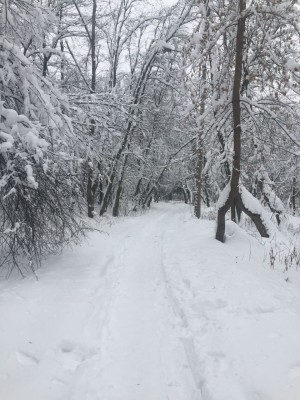
• In the European part of Russia (Moscow and its surroundings is what I am familiar with) winter usually lasts from the middle of November until the middle of February. Winter for us means snowdrifts, frosty temperatures, and lots of ice. Temperatures vary from plus 3C to minus 40C (extremely rare, only occurs at night). The normal winter temperature is about minus 10, which feels like minus 1 or 2 in London. Russian cold is dry, so it is not as penetrating as English wet cold. On nice days, when the sun shines, the skies are blue and the snow sparkles, minus 10 is a very agreeable temperature.
• Winter lasts about 5 months of the year, so you cannot stop to wait for it to pass. In all areas of life, it’s business as usual in winter: transport runs normally, kids go to school, planes take off, shops are open, people do sports and walks. We are used to winter conditions, so we just get on with it.
• Cold temperatures outside do not mean that you should freeze in your home. Contrary to British stereotype, Russians are a nation of softies who love being warm! Flats in big cities are centrally heated 24 hours a day with huge outside communal boilers, servicing a whole area. The heating is turned on in October and turned off in April. There is a period of 2-3 weeks in summer when heating systems are serviced and flats are left without hot water – the price of efficient heating in winter. You cannot adjust the temperature in your flat, the state is heating it for you. People who are not warm enough use electric heaters in addition to radiators. People who are too hot open the windows. Heating is vital for survival, so it is subsidised by the state and the temperature in your house does not reflect your income. It’s more of a “postcode lottery”! Blocks of flats in the centre of Moscow are the most heated ones. The average temperature in winter inside is plus 20-23C, however cold it may be outside. It is often impossible to tell what the temperature outside may be, and if it’s very frosty, it hits you in the face giving you a nasty shock as you open the front door! Most people wear T-shirts around the house even when it’s -20C outside. British people usually find Russian homes too hot!
• If you live in the country, however, you have to heat your own house. Most country houses have huge wood burning stoves, so one of your chores is to prepare enough firewood for the winter. A traditional Russian stove is made of bricks and in the old days used to be the most important thing in a country house: a family cooked in it, sat around it, slept on it (on a sort of a shelf on top of it). These days the stove powers the central heating, so that the heat is evenly distributed.
• Needless to say, all houses have double and sometimes triple glazing.
• Public transport in Moscow does not stop in any weather. Buses, trolleybuses and trams are pretty robust, they just plough on through the snow. Trains are built like tanks, they are about 1.5 times bigger than British trains, with huge wheels, and the wire for the electric supply is suspended above the track. Platforms do get very slippery though, and small suburban platforms are not cleaned, so passengers need to make tracks through the snow and hold on tight while entering the train. The tube is totally impervious to the weather since it’s underground. But the granite steps leading to tube stations can be very slippery!
• In the city of Moscow there are about 15,000 snow ploughs and all sorts of snow cleaning machines, clearing the snow off the streets 24/7. Snow cleaning machines look like combine harvesters – they pick up the snow and spit it out into lorries that accompany them. The lorries then dump the snow on the river (I think…) Pavements are cleaned manually by an army of street cleaners with shovels and crowbars (to break the ice). Both streets and pavements are sprinkled with chemicals and salt which help to melt the snow but ruin your shoes and car tyres. I hear that dogs’ feet suffer too! A typical Moscow winter sound at 5 or 6 o’clock in the morning is the sound of scraping of shovels on the pavement. All these activities must cost a fortune, but without them life would be impossible.
• So if you live in a big city, you can confidently leave your house in the morning, knowing that you won’t get stuck in the snow and will get there. If you live in the country though, it’s a whole different ballgame. You are on your own against the elements: cleaning your own driveway/footpath, shovelling the snow off the roof, breaking off the icicles and taking care of the area around your house. It’s hard work, so no wonder Russians love to live in towns!
• Even in big cities pavements get very slippery, especially when a thaw is followed by frost. You need to take extreme care when walking on ice, and it makes walking much slower and sometimes quite painful! Most people develop a sort of penguin walk, slow and balanced, but falls are very common, often resulting in broken limbs. I used to fall quite badly at least once every winter, but got away with it. And I do hugely appreciate London’s non-slip pavements in winter!
• What do you wear on your feet, leaving your warm centrally heated house in the morning and stepping on a snow free but icy pavement? If you are a woman, high heels, of course! Russians wear fur-lined boots in the winter, and lots of younger women balance on high heels because it looks good. I used to do it myself, and still do (although the height of the heel has considerably gone down), and can testify that it is possible and relatively safe.
• Clothes wise, you need a very warm coat and of course Russians love their furs! If you go to Moscow in winter, be prepared to see a “carnival of animals”: minks, foxes and raccoons are leading the way, followed by humble rabbits and sheep. Worn by men, women and children alike. Apologies to animal rights supporters.
• Everyone has heard of icicles falling off the roofs killing people. Yes, it is true but extremely rare. Icicles are cleared off the roofs regularly, but they grow back with a vengeance. The latest tragic incident was about a month ago in St Petersburg, when an icicle killed a baby in a pram. The mayor promised to punish those responsible – the municipal services…
• Finally, how do people drive in the winter? The answer is – with difficulty at first and then you get the hang of it. Everyone has winter tyres which are put on in November. There is a fair bit of skidding and sliding. And it takes a while to start your car in the morning and defrost it! One of the new gadgets is a remote control device that lets you start your car before you leave your house (it looks like a telly remote control), so that by the time you come down from your 10th floor, the car is warm and running! Pretty cool but expensive.
• And there are of course days when the cold is so extreme (extreme cold starts at about -30C) or the snowfall is so fierce that even the well-oiled Russian winter fighting machine does not cope. Cars get stuck. Children do not go to school. And you can only get from your house to the tube in two or three goes, making survival stops in all the shops on the way. But it’s rare and doesn’t last.

Still planning to visit Russia in winter? It’s certainly different, but the odds are that you may arrive there and it’s plus 3 with terrible slush under your feet… So good luck, and brush up on your Russian swear words in case you fall over… I can’t tell you any. I am a strict Russian teacher. But listen to the people in the streets.


Beginner Russian Course

By Vlada 23 January 11

Planning to learn Russian as a beginner and not having a clue about what to expect? Here are a few notes from a Russian tutor in London who has taught hundreds of beginners!

Out of all Russian courses that I run, beginners’ Russian is by far the most popular. When someone gets a new job with prospects of regularly travelling to a Russian speaking country, or has to deal with Russian clients/partners/friends on a daily basis, a desire to learn Russian is very understandable and admirable. Even if your Russian contacts speak perfect English, it is a nice touch of courtesy to be able to do a bit of small talk in Russian.

What should you expect from a beginner Russian course, taught by a professional Russian tutor?

Your first lesson (or part of it) will be dedicated to the study of the Cyrillic Russian alphabet. Beginners who are completely unfamiliar with the Russian language always think that learning the alphabet is the most difficult thing about Russian. This is definitely not true. Russian alphabet is phonetic in principle, and each letter represents one sound. So once you have learned all of them (33, but 2 are silent), you will be able to read anything in Russian, even if you yourself don’t understand it (a Russian speaker will!) Being able to read in Russian is a liberating experience for travellers – you will be able to use public transport, read place names, menus, business cards, etc. The Russian alphabet is a mixture of Latin (used in English), Greek and special Cyrillic characters, so some of the letters will already be familiar. Some will be completely new though, so you will need to make an effort to learn them.

Once you’ve gone through the alphabet in the first lesson, you should keep practising it again and again until you are comfortable with the reading. The teacher should make sure that alphabet practice is part of every lesson at the initial stage of a beginner Russian course.

The first lesson should also incorporate common greetings and polite words, written (ideally!) in the Russian script. Some people prefer to write Russian words in English letters – strictly speaking, that’s a language learning crime, because the whole point of having a different alphabet is that English letters do not correspond to Russian sounds and vice versa. Although, if you find something difficult to pronounce and remember, it is of course ok to make a memory note in English, but generally speaking if you are serious about the course, everything should be written in Russian only.

From time to time, I get requests to do a beginner Russian course without learning the alphabet, that is, being able to read or write. My answer to that is a definite no, unless it is just one or two sessions to learn some polite and simple phrases and get a bit of cultural coaching. A professionally taught course relies on a textbook or study pack, and not being able to read makes any serious progress impossible.

In Lesson 2 or 3 you should be familiarised with the initial basics of Russian grammar: the system of 3 genders, telling the genders apart and adjusting the endings of other words around the noun in the sentence to match its gender. The system of cases should come up in around Lesson 5 or 6. If you have studied Latin, Greek or German or any other language with cases, learning Russian will be much easier.

The main bulk of Russian vocabulary is Slavic, so if you are a native speaker of a Western European language all the basic words will be completely new to you. It would be a good idea to make a list of vocabulary after every lesson and learn it, otherwise the “snow ball effect” will kick in: there will be more and more new words to learn, making it difficult to catch up with the course.

Russian pronunciation is not difficult. Compared with Western European languages, it is quite similar to Italian, so Italians usually have a very good accent in Russian! The only difficulty for English speakers is that you will have to roll your “R”-s, and there are some unusual combinations of consonants, like “zd” or “kn”. Such combinations do not exist in English but they are perfectly pronounceable, you’ll just have to make a bit of an effort.

And, of course, in a beginner Russian course of all courses, doing your homework is very important! It can be as little as a couple of hours a week, but you will definitely need to have some time on your own, going over the material covered in the lesson. Otherwise the teacher will have to do it with you during the lesson (in case it’s a 1:1 course), and progress will be much slower. In group courses, doing homework is a key factor for not falling behind, so it’s even more important!

Whatever your motivation for starting a course, have fun, and we look forward to seeing you in our lessons!


Russian New Year Superstitions

By Vlada 31 December 10

More stories from a Russian teacher in London, or something that you might find interesting to know, but won’t be mentioned in your Russian lessons!

The New Year is the most beloved public holiday in Russia, and Russian people take New Year celebrations very seriously. We have developed a whole bunch of New Year traditions, customs and superstitions, passed down from generation to generation. On New Year’s Eve, even people who are not superstitious start making secret wishes when the clock is striking twelve, or wear a certain colour that is believed to bring you good luck in the New Year!

As I have mentioned in my blogs before, Russians are superstitious, and the old adage “You will spend the new year in the same way as you see it in” is universally recognised in Russia. So let me tell you about some other New Year superstitions that many Russians believe in. It will not contribute much to your progress in a Russian course, but will hopefully make you smile, and will add to your understanding of the Russian character. So here they are:

• The mother of all New Year superstitions is that you will spend your year the way you will see it in. As a result, on New Year’s Eve you must not have rows, weep or go to bed early.

• While the clock is striking twelve, make a wish and keep it secret. It will come true in the New Year. There is a more complicated version of the same ritual: before the clock strikes 12, prepare a piece of paper and a pencil. When the clock strikes, quickly write down your wish, burn the paper, put the ashes into a glass of champagne and drink it while the clock is chiming. Then the wish will definitely come true! (with a bit of a health and safety risk!)

• You should not give away money on New Year’s Eve, otherwise you will be parting with money all through the year.

• Do not lend or borrow money on New Year’s Eve if you don’t want to do it all through the year.

• You should wear something new on New Year’s Eve, and the year will be prosperous. You will be getting new things all year!

• Bread and salt on the festive table will bring you prosperity.

• Those who have empty purses and pockets on New Year’s Eve will spend the whole year penniless.

• On New Year’s Eve there should be abundance of food and drink on the table. This will ensure prosperity in the house in the New year.

• You should not take out rubbish from the house, otherwise you will have no domestic happiness.

• If you have a good time on the 1st day of the New Year, the whole year will be good. If you work hard on the first day of the year, your whole year will be full of hard work.

• You must not wash clothes on New Year’s Eve if you don’t want bad luck for your family.

• If your first visitor in the New Year is a man, it will bring you good luck. A woman is for bad luck.

• In the old days it was considered lucky if a cat slept in your bed on New Year’s Eve. For single girls it would mean getting married in the New Year. This superstition is even mentioned by Pushkin in Eugene Onegin.

• The last glass of drink at the New Year’s celebration will bring good luck to the person who drinks it.

• Sneezing on New Year’s Eve is for good luck and well being. This sounds like a consolation invented for people with bad colds!

In the old days, young girls used to do a bit of fortune telling on New Year’s Eve. For example, if the weather is very frosty outside, freeze some water in a spoon and look at the ice. Bubbly ice is for good health and longevity. A whole in the middle is for illness or death. A slightly more cheerful option is for a young girl to put the first piece of the festive meal under her pillow (hopefully, not Russian salad!), and before falling asleep to invite the future husband to taste her food. He would then come to her in her dream, to get her treat.

But whatever we do, by New Year’s Eve, we all try to finish things we are working on, sum up the old year and meet the new one with new hopes and plans. So may all your dreams come true in the New Year – but do take it easy on the first day of the year!

Happy Holidays!


Russian language in modern Ukraine

By Vlada 14 December 10

or Ukrainian “mova” versus Russian “yazyk”
by Anastasia Boosey

My students, who learn Russian, often ask me where I am from. My answer is always: “I was born in Ukraine but I am Russian!” In Soviet times people used to move around the country all the time, that’s how my very Russian parents ended up in Ukraine (it could easily have been Kazakhstan, Turkmenistan or Moldova). Of course they didn’t speak Ukrainian, but on a day-to-day basis they didn’t have to. Russian was the language they could use in any republic, and even abroad, in the Eastern bloc countries. But we did have to learn the language of the Republic we lived in, and thus we had to read, write and sing in Ukrainian.

Time went by and August 1991 brought us to the end of the Soviet era. Many Republics were very happy to get rid of the Russian/Soviet occupation and obtain their own identity (it was particularly true for the Baltic states). Ukraine too was proclaimed an independent state, and understandably, the Ukrainian language began a renaissance. TV, radio and lectures at universities all began to sound Ukrainian. It reached ridiculous levels: for example, if you’re watching a Russian soap, you either have a translation running at the bottom of the screen, or some one will speak over the actors’ voices! Nowadays the topic of Russian language in Ukraine as well as Russian culture and influence is still a sensitive one and commonly used in political propaganda. There are numerous jokes about the two languages, which I would love to demonstrate here, but I’m afraid the humour will be lost in translation.

So, you will ask, how similar is Ukrainian to Russian? Can I get by in Ukraine, just by speaking Russian? Would a Ukrainian person understand Russian and vice versa? Well of course, Ukrainian is very similar to Russian. In fact Ukrainian is classified as a Slavic language and it belongs to the Eastern branch of Slavic languages (like Russian and Belorussian). Throughout history, Ukrainians and Russians were very close, sharing history, culture and religion. Moreover, the Ukrainian capital Kiev is often called “the mother of all Russian towns”, and it once was the capital of Kievskaja Rus. The state existed from approximately 880AD to sometime in the middle of the 13th century when it disintegrated.

As a student of Russian language you are probably already able to read Cyrillic. The good news is that Ukrainians use the same alphabet (plus a couple of additional letters). So it’s not difficult to read. There are however a lot of words that are different from the Russian version. For example “spasibo” (thank you) in Russian is “dyakuyu” in Ukrainian, and Russian “pozhaluysta” (please) becomes “bud’ laska” in Ukrainian. In addition, some words sound slightly different. For instance, Russian “chto” (what) becomes “sho” in Ukrainian. Moreover, as I have mentioned above, politics does get involved in the structure of modern languages. In Soviet times we would get away with many words in Ukrainian that were borrowed from Russian. But times have changed: the new Ukrainan dictionary contains a great deal of words I have never heard before, or never thought could be used. A typical example is “vertolyot” (Russian for helicopter) which transformed itself into “galicopter”. So, some words clearly westernised themself to differ from the Russian influence. There are however plenty of identical words that both nations use.

So, can you get by in Ukraine if you only speak Russian? The answer is yes and no. It very much depends on the part of the country you are going to. I grew up not only in a Russian family, but also in the Russian (Eastern) part of Ukraine, where the majority of people are either Russian or Ukrainian and consider Russian their first language. In general, as the latest census has shown, in 2001 8,334,100 identified themselves as ethnic Russians (17.3% of the total population). However if you decide to travel to the west of the Country, be prepared to hear only Ukrainian (with some very heavy regional accents). Even I struggle to understand some people in, for instance Uzhgorod, a town not far from the Hungarian border. People there speak very fast in what appears to be a peculiar Ukrainian-Hungarian mix! In addition Polish is widely spoken in cities such as Lvov.

Unfortunately, if you try and talk to local residents in Russian they would normally understand you but will refuse to admit it and you may end up struggling to get by with your Russian. This is because the Western Ukraine is in general quite hostile towards its big brother (Russia). The numbers say it all: in Western Ukraine, like Ternopol oblast and Ivano-Frankovsk Oblast, the percentage of Russian language speakers is only about 1%. And finally, an average Russian person is unlikely to understand someone speaking pure Ukrainian. They may pick up some words but that’s about it, whereas the majority of Ukrainians do at least understand the Russian language or rossiysku movu.

The moral is: you can easily get by with only speaking Russian in Ukraine, but mainly in large cities and the capital, although beware the signs on the streets, as they are only in Ukrainian.

Lastly, let the numbers do the talking. In 1989 there were 4633 schools where Russian was the main language. By 2001 this number fell to 2001 schools or 11.8% of the total in the country. About 30% of Ukrainians speak Russian as their primary language. In the Kiev region only 7% of people speak Russian compared with 90% who speak Ukrainian. Ukrainian is spoken by 71% of Ukrainians in Ukraine.

So, whether you decide to go to Kiev, Lvov or visit sunny Crimea (77% of Crimean inhabitants named Russian as their native language), this country has a lot to offer no matter what language you speak!

Anastasia Boosey is a freelance Russian tutor in London, a language graduate of Kharkov University in Ukraine and the School of Eastern European Studies at UCL.


Moscow November 2010

By Vlada 23 November 10

More stories from a Russian teacher in London, or something that may be interesting for you to know, but won’t be mentioned in your Russian lessons!

I haven’t written about Moscow for a while – it’s a difficult subject, and I run the risk of being biased. I love Moscow the way one loves a pair of old comfortable shoes, or an old house that has become so familiar that you do not notice an odd crack on the floor or torn off wallpaper. So it is difficult to watch and analyse it objectively. But as time goes by, my home town changes so much in detail and appearance that it is fascinating to watch. I am always surprised at how dynamic it is – slightly unpredictable and always interesting. If you visited Moscow 10 years ago and think you know it, go back and have a look. You will find a very different city! So what’s new in Moscow in November 2010? Here are some of my observations.

News number 1 is of course that we have a new mayor, Sergey Sobyanin, after 20 years of Yuri Luzhkov. Not a Muscovite, a keen hunter and sportsman, he is said to be a figure closely related to the federal government, whose aim is to “bring Moscow back to Russia”. As all Russians know, Moscow is, and has always been, a state within a state, traditionally and notoriously different from the rest of the country. Will the new mayor be able to change that? I doubt it, but I will keep you posted.

Naturally, the new mayor has promised to improve the traffic situation in the capital. He had to, because the infamous Moscow traffic jams have got out of control completely, and do badly need to be sorted, it’s just that no one knows how to sort them. It has become so bad that driving around freely is only possible on Sundays and at night, and going on any major road at any time of the day will result in sitting in a traffic jam for hours. For a start, the new mayor has suggested that all Moscow civil servants start their working day one hour earlier than other people, at 8 am (this won’t be popular with his staff!). This should take them out of the worst rush hour and free up some space on the roads. He is also promising to make parking in the streets more orderly and more difficult (good luck to him!), as well as introduce more official parking spaces. And he is freeing some space by taking down all the little kiosks at the side of every street leading to a tube station.

The kiosks are loved by some and loathed by others. They sell all sorts of useful stuff – food, fruit and veg, flowers, newspapers, toiletries etc. They look awful and clog up the streets, but one can do all the shopping during the week on the way from work, without ever going to a proper shop or supermarket. You can get your dinner, flowers for your wife, soap and toothpaste for your bathroom, a book to read – all on the way from the tube station. Without them, the city would look better and much more European, but people will miss the convenience.

Another feature of modern times is that the Moscow authorities have been trying to introduce rubbish recycling, but Russians just do not take kindly to this idea; it looks like being tidy and ‘orderly’ goes against the Russian psyche. So however much I yearn to put newspapers in a separate place (I’ve been living in London too long!) they end up being shoved into the universal garbage chute on the landing of the block of flats, together with potato peel and cat litter! There’s a lot in the media about the necessity of introducing recycling, but it looks like the Moscow public is not ready for it.

The Moscow of today is full of work migrants. You can hardly hear the Moscow accent any more in the streets: not because all Muscovites have left, but because they are all sitting in traffic jams in their expensive but slow moving cars, and would rather die of boredom and frustration on the road than go anywhere by public transport! Sometimes I feel like the last of the Mohicans when I travel by tube. Everyone around is clearly not a local. The situation where about one third of the people around you speak hardly any Russian was unthinkable a few years ago. Now it is quite common. Muscovites, as you can imagine, are very grumpy about it, but it is, after all, a sign of success. Moscow is where the jobs are, and where the money is.

A topic much discussed is renaming the police. Soviet and later Russian police have been called Militia (“militsiya”) since the October revolution of 1917. The reason is that the word “police” (“politsiya”) for the Bolsheviks was associated with the oppression and the persecution of the tsarist regime. So by changing the name of the police force to militia they emphasised the fact that the new police is made “of the people and for the people”. And now, after all these years, President Medvedev proposes to change the name back to “police”, because that’s what they’re called in other countries. A lot of people hate this idea, saying that it’s the essence that needs to be changed, its organisation and work ethic rather than the name. Others think that it will bring Russia closer to Western Europe, psychologically, if not actually.

And of course, in the Moscow of 2010 there are numerous new restaurants representing all the possible cuisines of the world (Japanese is the current craze), and more and more very expensive cars, and ever more beautiful women beautifully dressed… There is poverty of course as well, but it’s often hidden behind the glitz and the glamour of the main streets. Moscow is indeed, quoting an old Soviet movie, a city of contrasts, a city where rules do not apply or can be made up as you go – provided you feel strong enough to do it. This is its charm and its danger, ever attractive and slightly scary.


Russian families

By Vlada 16 November 10

More stories from a Russian teacher, or something that may be interesting for you to know, but won’t be mentioned in a Russian course in London!

It was the beginning of Gorbachev’s perestroika at the end of the 80-s, and for the first time ever we got easy access to Western pop music. It came in very handy for me because I was a student and my English (which I was supposed to know very well at that point) was not very good, sadly. Especially dismal was the situation with listening comprehension: whole sentences, when said by native speakers, sounded like one huge word that did not make any sense! Anyone who has learned a foreign language in an academic style will know what I mean. One good (and fun!) way of improving it was listening to pop songs in English… So one day, when a mass of incomprehensible gibberish in one particular song by Sting, after being listened to a dozen of times, started to turn into real words and sentences, I heard very clearly – “...because Russians love their children too…” and got rather hurt for the nation! How do you mean – “love their children too?!” They love them so much that they are spoiled rotten and treated like kids until they are well into their late twenties, and often for the rest of their lives!

In the Soviet times, when we were supposed to have a “classless” society of equals, there was a slogan “We have one privileged class – our children”, and another one “Children must get the best of what we have!” (“Vse luchshee – detyam!”), which tells you something about the Russian culture.

Children are very important for Russians, and family ties are very strong. Parents and grown up children often live together, and some kids never leave the family home. Why is this? Partly for economic reasons – very few young people can afford their own flat or house; and partly for practical reasons – when people have children, their parents, and especially a live-in retired babushka or even a pra-babushka (the grandmother or great-grandmother) provide free round the clock childcare and housekeeping, while the younger generation is busy making a career and earning money. I must say I think it’s a great arrangement: it gives the older people a sense of purpose and value in life, and instils in kids a sense of family and continuity. That said, my heart goes out to the millions of Russian women who share their kitchen, and, ultimately, their life, with their mothers-in-law! I myself was brought up by my babushka, and I think it gave me a much better perspective on life and the culture of my country: the span of my memory, through her stories, goes far beyond not only my own life, but my parents’ lives!

I should say though that those young families who can afford to have their own accommodation, almost always do choose to do so, understandably, but keep in very close contact with the family. Generally, being in close contact with family gives Russians a sense of security, a sense that everything is all right in the world.

As a result of this collective living, people (and especially children) are not used to having any “private space”, so much valued in the English culture. The situation where a kid or a teenager would have his/her own lockable room where no one else is supposed to go, is hardly imaginable in Russian culture. I myself didn’t have any private space until the age of about 27-28 when I started living on my own, and I don’t think it had any adverse effect on me…

In Russia people usually get married very young, by Western standards, and have children in their 20s, although this tendency is now changing towards the Western norm, especially in big cities. As a result of young marriages there are a lot of glamorous young grandmothers whose grandchildren can be easily mistaken for their children. As a downside, early marriages often lead to divorce because they are less “thought through” and mature.
As I have already mentioned, it is very important for Russians to have kids. The kids are seen as a guarantee (unless you are really unlucky!) of being cared for in one’s old years. Childless people are seen as deprived of an important aspect of life, and are often pitied.

On the other hand, there is a certain respect for older people, as a result of their value for society. One thing that I have noticed in the UK, with sadness, is that old people, especially old ladies, are often portrayed as meek, incapable and infantile. This picture is very different from the Russian class of belligerent old ladies who are very active in trying to fight for their rights, restore justice, give instructions to younger people and tell them off. You can often hear phrases like “Have respect for his/her age!” which I have never heard in the UK. Putting your parents in an old people’s home in Russia is considered to be shameful and socially unacceptable. As a result, old people’s homes are rather grim and depressing places, full of people who have lost their family and found themselves alone and helpless.

And finally, one sad aspect of Russian family life is the decline in the birth rate. Russians are a dying nation, because most families have just one child, and having more than 2 kids is extremely unusual and is looked upon as weird! President Putin, who got concerned about the situation, introduced a stimulus package for women who have a second baby: they are given a 10 thousand US dollar equivalent as a bonus from the state (in the form of a deposit in a bank, not in the form of instant cash!) and that seems to have improved the demographic situation a bit.

So when you hear a Russian say something like “my kid (“moi rebenok”) needs my help tonight”, don’t assume automatically that it’s an 8 year old wanting help with their school homework. It may be a 30 year old man, twice the size of his mum, needing emergency help with food for a party!


Russian Folk Fairy Tales – the Good, the Bad and the Ugly

By Vlada 19 October 10

More stories from a Russian teacher, or something that may amuse you, and won’t be mentioned in a Russian course in London!

Do you know what will happen if you go deep into a large Russian forest and you are not careful (and your mobile runs out of battery!)? You will lose your way and start going in circles, led by a Leshiy who does it for fun (you may even hear him laughing…) and then you will come to a clearing in the forest with a curious house standing in front of you: it has giant chicken feet and can turn 180 degrees. The old lady (a witch, really) who lives in the house, Baba Yaga, will come home in a flying wooden bucket, using a broom as a steering wheel, and will trick you into shoving yourself into the Russian stove, where she will quickly cook you for dinner…

Are you scared? I was, as a kid! And although modern kids are probably more scared of monsters from a Harry Potter novel, the Russian fairy tales are still alive and well, and their characters, populating forests and rivers, have inspired popular films, songs, cartoons and advertising.

So who are they, the good, the bad and the ugly of the Russian folklore? Well, let’s start with the good guys.

A very typical representative of the fairy tale population is Ivanushka Durachok (Ivan the Idiot). He is incredibly lazy and incredibly lucky (and not as stupid as he looks). In spite of being totally useless, he manages to catch a magic pike fish who grants all his wishes. So he can stay on his warm stove and things and people will come to him, and of course in the end he will marry a beautiful princess, after passing all the tests invented by her father, the Tzar. They say he is the symbol of the Russian people: simple but resourceful, lazy but ready to act fast if necessary, pretending to be an idiot but being really clever…

And then, of course, there is a permanently depressed princess, Tsarevna Nesmeyana (Tsarina the Unlaughing) who keeps crying, until Ivanushka makes her laugh. She is the Tsar’s daughter, and she is so bored with her easy life at the palace that no one can make her smile, until Ivan comes with his magic touch and silly jokes.

Another female character is Vasilissa Premudraya (Vasilissa the Wise) – a young girl who is both very clever and very beautiful. She gives advice on how to avoid trouble. She can also do a bit of magic and helps people to find what they are looking for. She is the one who tells Ivan how to get the bad guy Kashey out of the way.

Kashey Bessmertnyi (Kashey the Immortal) is one of the baddies. He used to scare me the most. He looks like a skeleton, so when someone is really thin, Russians may say that he looks like a Kashey. Being immortal, he hides his death in the tip of a needle, which is hidden in an egg, which is in a duck, and the duck is in a hare, and the hare is in a wooden trunk suspended from a huge tree in the middle of a forest somewhere… so whoever breaks the needle will kill Kashey, and Ivan of course does it!

Kashey’s good friend and accomplice is Baba Yaga who lives in a little house with chicken feet, in some deep dark forest, and likes to cook people (children especially) for dinner. She travels in a big wooden flying bucket which she steers with a broomstick. While she is away her house is look after by her assistants – a big black cat and an owl. Baba Yaga is sometimes visited by Leshiy – the master of the forest. Needless to say that an encounter with any of these creatures is not good news for anyone. It’s only Ivan who manages to outwit them.

Russia is a land-locked country, rich in forests and rivers, which determines what kind of creatures dominate Russian folklore. Apart from the human-like monsters, it’s forest animals with human characteristics – a cunning fox, a timid hare, a ruthless but slightly dim wolf, a clumsy and really dim bear. Plus a couple of minor characters who look like mushrooms and plants. The rivers are populated by mermaids, and ruled by Vodyanoy, a watery monster who can drown innocent swimmers. The origin of all these fantastic creatures must be in the old Slavic Pagan mythology, with a pantheon of many gods.

I am not going to retell you the plots of any fairy tales – it would be more interesting to read them or watch one of the wonderful old Soviet-era movies or cartoons based on Russian fairy tales. Ivan, of course, gets all the monsters out of the way and marries Vasilissa Premudraya (just as well, since he himself is not very bright, and the Tsar’s daughter is too spoiled) and everything ends well, as it should do in a fairy tale.


The summer of our discontent – Moscow 2010

By Vlada 27 August 10

More info from a Russian tutor in London, or something that you may want to know but will not learn in your Russian course. Just what exactly happened in Moscow (and most of the European part of Russia) this summer?

I was going to write an article about Russian fairy tales in my next blog post but it has turned out this summer, yet again, that Russian reality is much more interesting than fairy tales! So I can’t help commenting on the hottest summer in Russia since records started 130 years ago…

August in Russia is a traditional time for disasters. I have no rational explanation for it, but it’s true. Abominable acts of terrorism, natural disasters, accidents on a large scale, coups d’etat – you name it, we’ve had it in August of other years. So what did this August bring us? Terrifying and devastating fires!

At the end of August Muscovites and lots of Russians living in the European part of the country breathed a huge sigh of relief. The incredible heat wave (38-40 degrees Celsius) lasting for two months has ceased. No more wet towels and sheets; smoke masks and fans.

I flew back to Moscow to see the extent of the fire damage, and to hear terrifying stories about the smog and heat. To my satisfaction, it was business as usual – I couldn’t see any signs of the ordeal Russians had been through (apart from the fact that everyone’s flats were still desperately hot – the latent heat takes weeks to dissipate).

All the same, there’s no doubt it was a full-blown ecological disaster. Here are just some of the facts.

• Without any warning from the Met office, unusual heat settled in Moscow and all the areas around it in the middle of June and lasted, without any breaks (although, mercifully, with a couple of thunderstorms) until the middle of August. Daytime temperatures reached +40 and sometimes +42 degrees Celsius.

• Forests around Moscow are rich in peat. Normally, peat should be covered with water forming a peat bog. But in some areas peat used to be mined, for fuel (instead of firewood) and for agriculture. To make peat mines, bogs were drained and later abandoned without being refilled with water. When the weather gets hot, the temperature inside a peat deposit becomes so high that peat ignites and starts burning, giving out suffocating smoke.

• Peat can burn in the ground, so there is no flame visible, and the smoke from it rises above the ground. It is very difficult to put out or control.

• Peat fires are not new to Moscow – they happen every year when the weather gets hot. This year they ran out of control because of the unusually long heat wave. In living memory, a very similar thing occurred in 1972, with smoke covering the whole city for days.

• When peat fires spread, they destroy hundreds of hectares of valuable forests, killing wildlife and people, devastating villages and crops. This is exactly what happened this year. Not only a lot of animals and birds perished, but some villages were burned to the ground leaving their inhabitants homeless. There are now campaigns in the media to help those who lost their homes and livelihoods. The government promises to build new houses for the fire victims as quickly as possible…

• The beginning of August was the worst. Thick smoke came into Moscow from the south (where there were most forest fires) turning it into a ghost city. It was impossible to see anything or to breathe properly outside. Combined with the 40 degree heat, it created a model of hell’s antechamber. People didn’t dare leave their homes, streets were empty. Ambulances were struggling to cope with the volume of calls from people with heart and breathing problems. Mortality in the city increased threefold. Morgues were full. The price of air conditioners and fans soared.

• Those who did venture out acquired a black sooty moustache under the nose after being outside for a while, and felt sick after inhaling too much carbon monoxide. The concentration of carbon monoxide in the air was 6 times higher than the acceptable level.

• An insignificant but curious fact: my family’s cat, a beautiful and treasured pet, fainted with heat stroke, to the horror of his owners, and had to be brought back to life with smelling salts and water. After that, he was sprinkled with water regularly and made to drink.

• People on the tube were seen fainting. The best places to be were big air-conditioned shopping centres and especially food shops where the staff sprinkled water around and washed everything to keep soot off the groceries.

• Some of my friends only went out at night (the fortunate ones who work as university lecturers, on a summer break with no need to go to work every day) – the best time to leave the house was at 3 am when the temperature was ‘only’ about 30 degrees.

• Everyone who could leave the city did so, going to visit relatives outside Moscow or on holiday if they were lucky enough to get a last minute holiday package.

• However, Russians are very stoical and resilient people who do not succumb to panic and fear easily (we’ve been through so much that a few puffs of smoke is not a big deal). Even on the worst days, Moscow functioned as normal: public transport ran as usual, people went to work, shops and restaurants were open and even the street vendors were out. You could get a take away if you ran out of food and were too scared to venture outside. It would be delivered with a bit of soot on top but still edible!

The question now widely discussed in the media is – why could it not be prevented or predicted? And was it the first disaster of this scale caused by global warming, or has it all happened before? The answer is – it could be prevented but wasn’t, through habitual Russian carelessness and lack of organisation. “A Russian man will not cross himself until thunder strikes”, says an old Russian proverb. We like to react to events when they have already happened, not before they are likely to happen. Why couldn’t the Met office warn us? Probably for the same reason!

And has it happened before? Yes, many times, but not as bad as this year in people’s living memory. I am just old enough to remember the summer of 1972 (very vaguely, I was a young kid), with smoke and fires all around Moscow. But here is an extract from a historical record from 1533, documented by the famous Russian historian Karamzin. “... from the 29th of June till September not a single drop of rain fell on the ground. Bogs and brooks dried up; forest fires were raging; the sun was dull and could not be seen long before the time of sunset. In broad daylight people could not even recognise each other’s faces and were suffocating from smoke. Travellers could not see their way; birds could not fly in the air…” Imagine the crop failure and the famine that must have come after that!! Sounds much more scary than the summer we’ve just had!

So if you are going to Moscow in August, check the latest news and the weather forecast. But remember, it will be business as usual as long as it is possible to breathe at all! Even your Russian course, were you to plan one, would not be cancelled…


Learning languages

By Vlada 26 July 10

What does it take to become a good linguist? More notes from a Russian teacher in London, or something you may be interested to know but may not learn in your Russian lessons.

We’ve all heard of polyglots – people who can learn (and retain!) many languages. Apparently, a polyglot is someone who fluently speaks 8 or more languages. But do such people really exist? And what does it take to master a foreign language, just one, but completely different from your own? In 20 years of Russian and English teaching (and a lifetime of learning!), I’ve worked with a lot of talented linguists, and here are my observations. For a good linguist, it is important to have:

• A good memory. Being able to memorise, and more importantly, retain words and sounds. To become fluent in a language, you will need to learn at least a thousand words and their forms. Is it realistic for anyone? Yes, it is. People are not born with a good or bad memory. Memory can be trained to be good, and paradoxically, the more you learn the better your memory becomes! So people who have a lot of experience in learning and using foreign languages can usually memorise words quickly and in large quantities.

• A lot of patience and practice. To retain a word in your memory takes repetition and practice. That is why it is not realistic, in my experience, to speak many languages to a very high standard (unless you are a linguistic genius – but I’ve never seen one!) – you simply won’t have a chance to use them often enough, and when you don’t use them, they slip away.

• The ability to listen and imitate. Musicians are usually very good at languages because they can hear very well the sounds of the language and can imitate them. Studying phonetics and knowing how sounds should be formed will help, but having a good ear means having a good accent.

• Logical thinking. It’s important to understand how a language system works, especially in languages with complex grammar, like Russian. Just to decide which ending to use for a noun, one needs to recreate a whole logical sequence in one’s memory, recalling a word, and then choosing its correct form judging from the word’s gender, number, and case.

• Ability to “play it by the ear”, and try to develop a “feel” for a language. When you’ve used a language for a while, you can sometimes instinctively predict what a word should sound like. Not a hundred percent reliable, but a good linguist is not scared of making mistakes!

• Does age matter? It is true that the older you become, the more difficult it is to learn a new language, simply because your head is so full of other things! But with a bit of effort and persistence one can learn a language regardless of age. My oldest students are in their 70-s (and maybe even 80-s, I am not sure), and they cope perfectly well. And on the contrary some people in their teens and 20-s find it hard to concentrate and retain information. So it’s more about your learning skills and mental discipline than age. Also, in my experience older learners may take a longer time to learn not because their brain cannot hold the extra information, but because they are too busy, always thinking about lots of things at the same time: work, family, kids, houses, travel, – all sorts of worries come first.

• Motivation and interest in the culture and people of the language. A language cannot be learned in isolation from a culture it belongs to. With it always comes a whole set of values, history, literature, music, the way of life of the people who speak it, and who created it. It is usually the student’s interest in the whole culture, or a particular aspect of it (or person associated with it!), that is the driving force of the language learning.
My students of Russian sometimes ask: is it possible to speak many languages to the same high degree of proficiency? Theoretically, yes, but in 20 years of language teaching in two countries I have never seen anyone who could speak more than 3 different (not closely related, like Russian and Ukrainian) languages to native speaker standard. One can know 5 or 6, and use them from time to time, but they would make all sorts of mistakes that would an educated native speaker would not.

Another question that comes up in Russian lessons: is it possible to get rid of your foreign accent? In my experience, almost, but not quite, if you started learning a language as an adult. You have to study a bit of phonetics, be a good imitator and have a good musical ear to perfect your accent. How important is it? It’s up to each learner to judge. A slight foreign accent may add charm and character to your speech. After all, as my teachers used to say, most of us are not training to be a spy! On the other hand, if you are a professional linguist, a teacher or interpreter, a heavy accent will not contribute to your professional credibility. I have seen foreign students of Russian (speakers of Western European mother tongues) whose accents are so good that I would not be able to place them and it would take a few minutes of careful listening to realise that Russian is not their first language.

To cut a long story short, there are no bad linguists – there are lazy ones! As we say in Russian, “hard work and patience will grind anything”, even the solid rock of Russian grammar… So if you’ve never learned languages before, do not be put off – just do it!


History of the Russian Language

By Vlada 9 July 10

Where does the Russian language come from? More info from a Russian teacher on something that you might want to know but will not learn in a Russian lesson.

Russian comes from the same source as English. It’s an Indo-European language, with its origin in Sanskrit, the ancient Indian language. But that’s a very broad classification, covering the whole “family” of languages. Narrowing it down, Russian is classified as a Slavic language, belonging to the Eastern branch of Slavic languages, along with Ukrainian and Byelorussian. In the Middle Ages (from the 6th to the 10th century) the Slavs, who occupied a large territory of Eastern Europe, from the Balkans in the south to the very North, had a common language – Old Slavonic, or Church Slavonic. Although the actual spoken languages of Slavic tribes may have differed from each other, the written version could be understood by all the Slavs. Even today, the grammatical structure of different Slavic languages is very similar, and it originates in Old Slavonic. I remember the bitter complaints of my fellow students at University who had to study Old Slavonic, about it being fiendishly complicated and awful to learn! (I didn’t have to learn it, fortunately or maybe unfortunately… my main subject was English, so we had to learn Old English!) If you compare words and grammar of different Slavic languages, you will see that it was clearly one language at some point in history which then split into several branches.

In the 9th century, two Greek missionaries, Cyril and Methodius, had to translate and write down Biblical texts in Old Church Slavonic, to convert Slavs to Christianity. For this purpose, Cyril devised a new alphabet, now known as the Cyrillic alphabet, based on the Greek alphabet, with a few additional letters invented to represent specific Slavic sounds.

Old Russian was one of the Slavic dialects, spoken in Eastern Europe, today’s Russia, until the end of the 13th century. Around this time the Russian language started to separate from the other Eastern Slavic languages (Ukrainian and Byelorussian). At the same time, the prevailing written language was still the Old Church Slavonic, introduced and supported by the Orthodox Church (Russia was christianised in the 10th century, having been a pagan culture before that). With time, written and spoken languages separated, but Old Slavonic remained as the literary and official language until the 18th century. By that time, it was almost incomprehensible for most ordinary people!

In the early 18th century, the Czar Peter the Great (who was determined to westernise Russia) introduced and promoted a large number of foreign words from Western languages that were borrowed and incorporated into Russian. This resulted in the mixture of the archaic Old Slavonic with borrowed Western words and colloquial Russian, which started being used in writing. Peter also simplified the Cyrillic alphabet, getting rid of some unnecessary Greek letters.

The famous Russian poet and Scientist Mikhail Lomonosov who lived in the 18thcentury, wrote about 3 different styles of Russian which were in use during his time: the high one, for high poetry and religion, the middle one, for literature, poetry, prose and science, and the low one, for personal communication and low comedy. The Middle Style, which combined features of East Slavonic dialect and Church Slavonic, became the basis of the modern Russian language. In the middle of the 19th century, modern Russian, based on the Moscow dialect, was formed and became the official language of the Russian Empire.

The first person who started writing in the modern colloquial Russian was Alexander Pushkin, the most famous Russian poet, the Russian equivalent of Shakespeare. He is considered the “father” of modern Russian. Poets before him used a very artificial bombastic language that no one spoke in real life!

Russian was the official language of the Russian Empire (which used to include Poland and Finland!), and later the Soviet Union. After the collapse of the Soviet Union in the late 80-s the individual nation states have been reviving and bringing back their native languages. However, Russian remains the “lingua Franca” of the whole post-Soviet territory and Eastern Europe. In a recent census, 153 million people considered Russian to be their mother tongue and another 61 million said they spoke it fluently as a second language. The number of Russian speakers in the world is about 220 million.

So, we are looking forward to seeing you in our Russian lessons, so that you could join the club!


Learning Russian Vocabulary

By Vlada 25 June 10

How many of all those words that you are trying to learn in Russian lessons, are actually Russian? And how many of them do you have to learn? More notes from a Russian teacher on something that you might want to know.

The biggest dictionary of the Russian language (“The Contemporary Dictionary of the Russian Language” in 3 volumes) lists about 250 thousand words. The vocabulary of Pushkin (Russian equivalent of Shakespeare) is about 20 thousand words. An ordinary person needs a couple of thousand words to communicate successfully.

How does Russian everyday vocabulary compare with English? My personal observation is that in Russian there are more simple everyday words describing things and actions than in English. Thus, for example, what can be expressed in English with a simple verb “to clean”, in Russian would be rendered by different verbs, according to HOW you clean it (with water, or with a dry brush) and WHAT is being cleaned (cleaning a house is different from cleaning a car or cleaning your teeth etc). Some verbs are so narrow in meaning that they can only describe one particular action, for example, “umyvatsa” means to wash one’s face, and nothing else! Talking about having many words for one thing: students like to ask – are there many words in Russian for snow? Interestingly, no! There is only one, “sneg”. However, we do have several for a snow storm… On the other hand, it looks like in English there are more “sophisticated” difficult words, often borrowed from foreign languages. And that is why the most comprehensive English dictionary (The Oxford English Dictionary, 291 thousand words) lists more words than a Russian one.

Where do all those words come from? Russian (as well as English) belongs to the Indo-European family of languages, which originates from Sanskrit. So very simple basic words are often similar to other European languages: names of relatives, numerals, common animals, simple words like “water”, or “sun”. But that won’t be a great help for an English speaker: there aren’t many of those simple words, and the similarity is often very vague.

Following the language classification further, Russian is a Slavic language, so the main bulk of vocabulary is Slavic. For those who already speak a Slavic language, such as Polish, Czech or Bulgarian, learning Russian words is much easier than for a native speaker of a Western European language. That said, there are a lot of “false friends” in Russian for speakers of other Slavic languages. A classical (and a very amusing!) example is the word “uroda” which in Polish and Ukrainian means “beauty”, but in Russian – a complete opposite, “ugliness”! In Soviet times, among very few foreign magazines available, was a Polish glossy called “Uroda”, dedicated to fashion and beauty. What were Russian supposed to think it was about?! Or another good one: a “sklep” in Polish is a shop, and in Russian – a crypt. You can see how these words developed – “uroda” is something extraordinary (good or bad!), and “sklep” is a place of storage (foods or bodies!)

But the Slavic vocabulary in Russian was “diluted” by additions from other languages. With the Tartar invasion in the 13th century came Turkish words (they say all the worst swear words in Russian come from that period in history) And with the epoch of Peter the Great, who loved all things European, and especially German and Dutch, came a lot of German words. The Russian for “potato”, for example, is “kartofel” and a sandwich is “buterbrod”. As time went by, and we developed connections with other cultures, more and more non-Slavic words entered the Russian vocabulary. Catherine the Great, Peter’s granddaughter, loved everything French and decided that all her courtiers should speak French to her and to each other. And what a Russian monarch says, Russian people do! As a result, from that time until the communist revolution in 1917, Russian aristocracy and all well-educated people were bilingual in Russian and French, brought up by French governors and tutors. They would talk French to each other, and Russian to commoners and servants (quite handy – the servants could not overhear and then gossip!) As a result, a lot of French words became part of the Russian language – albeit often distorted in meaning. So a “planchette” is a military note pad, and a “plafond” is a round glass lampshade (possibly attached to the ceiling but not the ceiling!). A “portefeuille” is a briefcase, and “manto” is more like a cape than a coat. The coat is “paletot” – a very old French word which is not used any more.

In more recent times, with the advance of modern technology and the Internet, we have been borrowing more and more English words. Traditionally, English words in Russian are names of sports, some breeds of dogs, and more recently, all the computer terms and words related to the world of media and high technologies. Scholars complain that Russian is now littered and ruined by a host of completely unnecessary English words, that have a perfectly good Russian equivalents. But they sound “cooler” and more sophisticated, so journalists and politicians love to use them, and they get spread around. Should that be regulated and restricted? Perhaps, but a language is a living organism created by its native speakers, and not by learned scholars. Despite what the French Academy might think, you can’t regulate it. It will regulate itself!

So good luck in learning it all! Or maybe just a couple of hundred words to start with, and a couple of thousand to finish. It’s a nice sounding language though. You won’t regret it!


Learning Russian grammar

By Vlada 27 April 10

More info from a Russian teacher in London: a lesson ABOUT the Russian language as opposed to lessons OF Russian.

What should you know about learning Russian if you are considering taking a Russian course?

This is another article in my series of my blogs about the Russian language. This time, let’s talk about Russian grammar. What are the main features of Russian grammar that you need to be aware of, if you are about to start learning Russian?

I am afraid most English speakers who have never learned a Slavic language before underestimate the complexity of Russian grammar. The reason is that in a beginner Russian course grammar is usually presented in a simplified way while the course is centered around vocabulary, useful phrases and reading skills. This is a totally justified approach because for a beginner it is more important to get to grips with the alphabet and basic vocabulary than to tackle grammatical complexities. Also, at a beginner level in Russian some grammar aspects are actually easier than in Western European languages! For example:

• The verb “to be” is not used in the present tense, which makes a learner’s life much easier. So if you want to say “This is a table”, all you have to say is “This table” – as simple as that. Or, “I am a student” equals to “I student”. All you have to do is FORGET about “am”, “is”, and “are”, rather than learning those forms. How good is that?!

• There are no articles “a” and “the”, so again, all you have to do is forget about them. Unlike Western European languages, Slavic ones do not have articles. The whole concept is completely alien to us, and Russians who are learning English always struggle with using “a” and “the” correctly. If you listen carefully to a native Russian speaker talking English (especially someone whose English is not very advanced!) you will notice that some articles are missing, and some will probably be used incorrectly and inconsistently.

• There are very few irregular verbs. The overwhelming majority of verbs conjugate in a regular way, sometimes with small variations. For comparison, while learning English as a foreign language, you have to learn about 120 irregular verbs (3 forms) by heart!

Russian belongs to the Indo-European family of languages, the same as all Western European languages, so all the grammar concepts are familiar and easy to understand. In fact, its grammatical composition is very similar to Latin. So for those students who are familiar with Latin grammar, Russian grammar will be nothing new.

The complexity of Russian grammar lies in the fact that grammatical forms are incorporated in the word itself, unlike in English where a lot of auxiliary words are used and grammar forms consist of several words rather than one. So as a result, the minute you reach an intermediate level, you will have to learn a lot of endings for different parts of speech and operate little logical sequences in your mind, of the type: this is a noun, it’s masculine, it’s singular, it must be the genitive case, so the ending is – “A”! It means that you’ll be doing a lot of memorizing and a lot of practice. It’s a great exercise for your brain and memory! After a while, once you’ve said the same thing a hundred times, it becomes automatic, and you don’t have to strain your brain any more. As the saying goes: “Repetitio mater studiorum”.

Here are the key features of Russian grammar:

• Gender, which is very important for Russian grammar. There are 3 genders – masculine, feminine and neuter. Masculine and neuter words have the same endings in most cases, and feminine ones have different endings.

• Case: there are 6 cases: Nominative, Accusative, Genitive, Dative, Instrumental and Prepositional (Locative). Each case has certain meanings attributed to it, which are quite logical and correspond to the Latin case system (for example, Genitive is the same as possessive, and Accusative is for direct object etc). Changing the word ending for case is called declension. In Russian, practically all parts of speech decline: nouns, pronouns, adjectives, and even numerals. They all have their own endings in different cases. The only part of speech that does not change is the adverb.

• There are 3 types of declension for nouns, depending on their gender and the type of ending in the nominative.

• Adjectives do not have their own gender or type of declension. They follow those of the noun they “belong to”.

• Verb categories include the 3 tenses – present, past and future, and 2 aspects – perfective and imperfective. In the present tense, verbs conjugate (that is, change their endings according to the person of the subject – I, you, he, etc), and you will have to learn 6 personal endings in the present tense. There are 2 types of conjugation but they are very similar. Most verbs are regular, which is good news! The past tense is really simple: there is no conjugation. Instead, there is a very simple set of endings for masculine, feminine, neuter and plural. In the past and the future, there is a choice of 2 aspects: imperfective for regular or long actions, and perfective for short and completed ones. The future tense is the most complicated one: there are 2 kinds of future, depending on whether you need to use an imperfective or perfective verb.

• All this may sound complicated, but it’s logical and generally the verb system is easier than in English! The only down side is that every time you learn a new verb you will have to learn “two for the price of one” – the imperfective and perfective infinitive forms.

• Conditional mood is very simple. It is basically the same as the past tense, with the addition of one little word that stays the same. And there is no subjunctive!

• The most grammatically complex part of speech is the participle. Participles have every conceivable grammatical category: they can be perfective or imperfective, past or present, passive or active, and they have genders and cases and decline like adjectives. A complete language student’s nightmare! The good news though is that they are a feature of written and formal style, so we don’t use them much in colloquial speech.

• Another interesting feature of Russian grammar is that the word order is flexible, and you can put words in a sentence wherever you want, without being incorrect. You can say “I know him” or “I him know” or even “Know I him” or “Him I know” and all these phrases will be grammatically correct. The former two are completely interchangeable, and the latter two are emphatic, with the word in the 1st position in the sentence being the most important. So in Russian it’s more about using the correct case and ending, than sticking to the fixed word order!

Russian grammar has of course been changing through the centuries. Just like all modern languages (and English especially!) it has a tendency to become simpler. For example, we used to have 7 cases and somewhere along the way we have lost one – the Vocative case, which other Slavic languages still have.

Is Russian grammar difficult to master? As a teacher who has been running Russian courses for many years, I can assure you that while Russian grammar is highly “synthetic” (all based on endings and word changes), it is also logical and can, no doubt, be learned and used very successfully by anyone who is willing to dedicate some time and effort to it. As you can see from the description above, it has its moments, but it also has some simple features. The complicated system of cases for nouns, adjectives and pronouns is balanced out by a relatively simple system of verb tenses and the absence of subjunctive.

Let me also assure you that it’s worth it. You will be rewarded when you have mastered the complexities of Russian grammar and can appreciate the beauty of the language. Russian is not a verb-based language, so not a language of action, like English. Russian is great for poetry, songs and literature and less good for business correspondence. That is why all Russians love poetry: it is romantic, musical, often sad but soothing. It’s a language of contemplation and description, which perhaps reflects the Russian national character. But that’s quite another story and a topic for another article.

So, good luck with your Russian lessons, and happy learning! And remember that even if you don’t get it 100% right, people will still understand you and will appreciate your effort!


Russian alphabet and spelling

By Vlada 20 April 10

More info from a Russian teacher in London: a lesson ABOUT the Russian language as opposed to lessons OF Russian.

What should you know about learning Russian if you are considering doing a Russian course?

This is another article in my series of my blogs about the Russian language. This time, let’s talk about the Russian alphabet and spelling.

Most English speakers who have never learned Russian before are daunted by the prospect of having to learn the Russian Cyrillic alphabet. I can see why: it looks exotic and completely different, so just the look of it can put you off! But is it difficult to learn for someone doing a beginner Russian course? The answer is a definite No! Let me assure you that of all things that you will have to learn in your Russian course the alphabet will be one of the easiest and the most fun things to learn. Here are some facts about our alphabet, for those who are interested in learning Russian:

• The modern Russian alphabet consists of 33 letters. Two of them are silent and serve to modify the sound of the letter before (the soft sign) or after (the hard sign).

• It is called Cyrillic because it was invented (or, rather, compiled from other existing alphabets) and popularized, by St Cyril, and to a lesser degree, by his brother St Methodius. Cyril and Methodius were highly educated Greek monks from Thessaloniki who became Christian missionaries in Eastern Europe in the 9th century AD. The initial purpose of the new alphabet was to translate the Biblical texts into Slavic languages.

• The Cyrillic alphabet is a mixture of several alphabets: some letters are the same as in Greek, some are the same as in Latin, there are even a couple taken from Hebrew, plus a few “original” ones, that might have been “recycled” from an older alphabet. So if you are familiar with the Greek alphabet (even with the symbols from your school lessons of physics!), it means you know half of the Russian alphabet already!

• There are 10 letters representing vowel sounds. The rest of the letters are consonants, and two letters are silent.

• The handwritten version of the alphabet looks different from the printed one at first sight, but if you take a closer look you will see that most letters are exactly the same as the printed ones, they are just “curvier”, so that you can join them up in handwriting. However, about 6 of them do look different.

• The question that my students often ask is – do I have to learn the joined up writing? Strictly speaking, no. At this day and age, we type more than we write by hand. And when we do, we often do not stick to the classical version of handwriting, mixing the styles. So printed letters will do, everyone will be able to read them perfectly well. However, this kind of writing will not look very sophisticated!

• Russian spelling is based on the phonetic principle (one letter represents one sound), which makes it reasonably easy. It is in fact a compromise between a phonetic approach and the rules of word-formation and grammar. It has, of course, a number of exceptions and arguable points (it wouldn’t be a living language if it didn’t!)

• There have been several reforms of Russian spelling and the alphabet. The current spelling is the result of the major reform of 1918, which was carried out by the Bolsheviks after the October revolution of 1917, but was in fact prepared by scholars long before the revolution. Four letters were deemed to be unnecessary and were abolished. To be fair, those letters did make spelling and reading more difficult. So if you take a book published before 1918, the text will look even more exotic than modern Russian writing! All the books printed after 1918 follow the “new” spelling rules, so all old books had to be edited carefully to bring them up to date. What a gigantic task it must have been, in the absence of computers! It is said that Tolstoy’s “War and Peace” (a huge book that has about 1500 pages) became 80 pages shorter because of the 1918 spelling reform!

• Russian punctuation follows strict rules (there is no such thing as the author’s choice of punctuation!) and is similar to French and German punctuation.

• Russian word stress is unpredictable but we do not use the stress marks while writing. However, you will see accents marked in all materials and textbooks for foreign students of Russian, just to make reading easier.

• There is one letter, E with two dots over it, which may cause difficulties in reading for foreign learners of Russian. The thing is that E without the dots represents a different sound from the one with the dots but in modern spelling the dots are not marked! The exception is made for books for children and foreign students. This is a tendency that has developed in the last 15 years, and I think the reason for omitting the dots over E is fast computer typing: this letter is in the far corner of the keyboard, and most people save time by not using it! So as a speaker of Russian you are supposed to know which words contain which kind of E. I can see that this is frustrating for anyone learning Russian, but if it’s any consolation, Russians struggle with it too: since the use of the dots became optional even in documents, people have been complaining that their surnames have been mispronounced!

• The Cyrillic alphabet is used to write in about 50 different languages, mainly in Russia, Central Asia and Eastern Europe. Such languages as Belarusian, Ukrainian, Bulgarian, Kazakh, Kyrghyz, Mongolian, Serbian use Cyrillic. Most of them use a version of the alphabet which is slightly different from Russian, with additional letters from Greek or Latin alphabets, and variations of standard Cyrillic letters.

• And finally, as a teacher who has been running Russian courses for many years, I can tell you that an average learner takes 2-3 lessons to master the Russian alphabet, and a couple of months of practice to be completely confident with reading and writing. That’s if you do a standard extensive course with one lesson a week, where only a part of the lesson is dedicated to practicing the alphabet.

So, good luck with your Russian lessons, and happy reading!


Learning about the Russian language: Facts and Figures

By Vlada 23 March 10

More info from a Russian teacher in London, or a lesson ABOUT the Russian language as opposed to lessons OF Russian.

What are the main points about the Russian language – the language that we at Just Russian are striving to learn or teach? How many people speak it? Where does it come from? What should you expect if you have decided to learn Russian or if you’re just considering taking Russian lessons?

You will find the answers to these and many other questions in my new series of blog articles about the Russian language.
Let’s start with some key facts and figures:

• Russian is the most widespread language of Eurasia, and the most widely spoken Slavic language. In Europe, more people speak Russian as a mother tongue than any other language.
• Russian belongs to the family of Indo-European languages (which means that it is related to all Western European languages) and is one of three modern East Slavic languages, together with Ukrainian and Belorussian.
• Russian is spoken by about 165 million people as a mother tongue and by about 114 million as a second language.
• Russian is the 6th most widely spoken language in the world.
• It is one of the six official languages of the United Nations.
• It is spoken in most of the ex-Soviet states, such as Byelorus, Ukraine, Kazakhstan, Kyrgyzstan, Moldova and the Baltic states, either as a native or a second language.
• In some areas of Ukraine and Belarus, 2 languages are spoken interchangeably, and in certain areas this resulted in a language mixture called Surzhyk in Ukraine and Trasianka in Belarus.
• In the Soviet times (1920s – 1991), each of the republics of the Soviet Union had its own official language, but the unifying role and superior status was given to Russian. Since the break-up of the USSR in 1991, the newly independent states have been encouraging and developing their native languages. However, the role of Russian as the post-Soviet language of international communication has continued.
• In Soviet times, Russian was mandatory for school children in the ex-USSR states and Soviet allies: Poland, Bulgaria, the Czech Republic, Slovakia, Hungary, Albania, Mongolia, Cuba. However, younger generations are not learning it any more, giving preference to English (with Mongolia being an exception).
• Russian is spoken in large Russian-speaking immigrant communities in Israel (about 750,000 people), the USA (about 700,000 people) and Canada.
• Russian is the official language of the Russian Federation but it is not the only language spoken in the country. In some regions it shares official status with other languages belonging to ethnic autonomies within Russia, such as Bashkir, Tatar, Yakut.
• Written examples of Old East Slavonic, the predecessor of Russian, come from the 10th century.

... and a few facts about the history and the structure of the language:

• The Russian (Cyrillic) alphabet has 33 letters and is phonetic in principle, which makes it relatively easy to learn. It is called Cyrillic after St Cyril, a 9th century Greek monk who, together with his brother Methodius, devised this alphabet (or, rather, a much older version of it!), incorporating elements of Greek and Latin into it, as well as introducing a few new letters.
• Russian grammar is close to Latin in structure, and is based on a system of noun cases (6) and verbal conjugations, which makes it relatively difficult to master.
• The core of Russian vocabulary is Slavic, so native speakers of other Slavic languages will find it easy to learn, while native speakers of other languages would have to memorize large quantities of completely new words. There are, however, quite a lot of words borrowed from French, German and English in the last couple of centuries.
• Russian punctuation rules are similar to French and German ones.
• The modern Russian literary language traditionally dates from the time of Alexander Pushkin (1799-1837), the most famous Russian poet and writer. Pushkin hugely influenced Russian literature by introducing a simpler style of writing based on the colloquial Russian of the time, as distinct from his predecessors who used very old-fashioned “literary” grammar and vocabulary.

To be continued.


Russian holidays and celebrations Part 3

By Vlada 16 January 10

More country info from a Russian tutor, or something you might find interesting but may not learn in a Russian course

In previous blog posts, I described the Russian public holidays of the first half of the year. In summer, we don’t really have any public holidays, apart from one, not a very well established one, the so-called “Day of Russia”.

The Day of Russian Independence (The Day of Russia) – the 12th of June

This is one of the “youngest” public holidays in the country. The Day of Russia, or the Day of Russian Independence, as it was first called, was established in 1994 by Boris Eltsin, the first Russian (and not Soviet!) president. Before that, Russia was one of the Soviet republics and not an independent state, but after perestroika and the collapse of the Soviet Union all the Soviet republics, one by one, became independent countries. So the 12th of June celebrates this significant moment in history for Russia.

Because this is a new holiday, there is no tradition of celebrating it. So most people just enjoy a day off in summer, without attaching any significance to it.

The 1st of September – “The day of Learning”

The 1st of September is traditionally the first day of the school year, for children and all students. It is not a public holiday but a high profile day in the life of the country which has a strong tradition of education. Kids come back to school (usually reluctantly!) after a three month long summer holiday, carrying bunches of flowers for their teachers. There are festive speeches and presentations, usually in the school yard in the open air, and not much learning is done. It’s a day of introduction to school life, of settling admin questions and meeting new teachers and classmates.

For college and university students it’s the beginning of the new academic year which is divided into two semesters and ends in June. For young people, this day symbolises the end of summer (everyone’s favourite season), and return to “normal life” after a long summer break. For their parents it’s the start of numerous worries related to the kids’ education. On the whole, it’s a cheerful occasion, which, paradoxically, is not looked forward to by anyone!

The day of National Reconciliation: the 4th of November

This, again, is a new holiday, the meaning of which is obscure to most people. I suspect that the real purpose of this public holiday is to fill the gap that appeared when the 7th of November (the Day of the October Socialist Revolution) was scrapped after perestroika. It used to be a huge public holiday, with a big military parade in Red Square (with the famous missiles and tanks intended to scare the rest of the world), an occasion consisting of 2 days off. However, after the collapse of the Soviet Union and the complete change of state ideology, the communist revolution celebration was abolished. But no one wanted to lose a public holiday, so a new one had to be invented around the same time. It must have been quite tricky, because the holiday that finally replaced Revolution Day celebrates something that happened a long time ago and most people who didn’t pay much attention in history lessons do not know much about it.

According to the church calendar, the 4th of November is the day of the Kazan (a city in Russia) icon of the Virgin and it used to be a public holiday in Russia from 1649 until the communist revolution. So strictly speaking, it’s not a new holiday, but a well forgotten old one! On this day in 1612 the People’s Militia led by two civilians – a commoner Minin and a prince Pozharsky ¬ liberated Moscow from the Polish occupants who had to seized the city and put their own Tzar on the throne. The people’s militia in those days was the manifestation of the nation’s unity in the face of danger, of everyone making an effort for the country regardless of their social status, religion or age. So the new holiday, established in 2005, was called “The Day of National Unity”.

Having mentioned all these public holidays, I should mention that the most important celebration for Russians is not a public one! The most important celebration of the year, with the biggest gifts and parties, is one’s birthday. Russians get rather surprised and often disappointed when they discover birthdays are not as important in the UK. So if you deal with Russians on a personal or business level (especially a personal one), try to find out the important date and treat it as a special occasion.


London's top Russian tutor offers private Russian lessons, Russian tuition and tailored Russian courses at all levels. Contact us for Russian lessons and Russian courses in London and Surrey.

Home | Contact Information | Website design by CinqPages